Caso Rossi, le dichiarazioni di Matone e Vinci riaprono il confronto pubblico
28 Febbraio 2026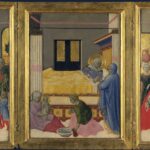
The Birth of the Virgin by Master of the Osservanza, c.1440
1 Marzo 2026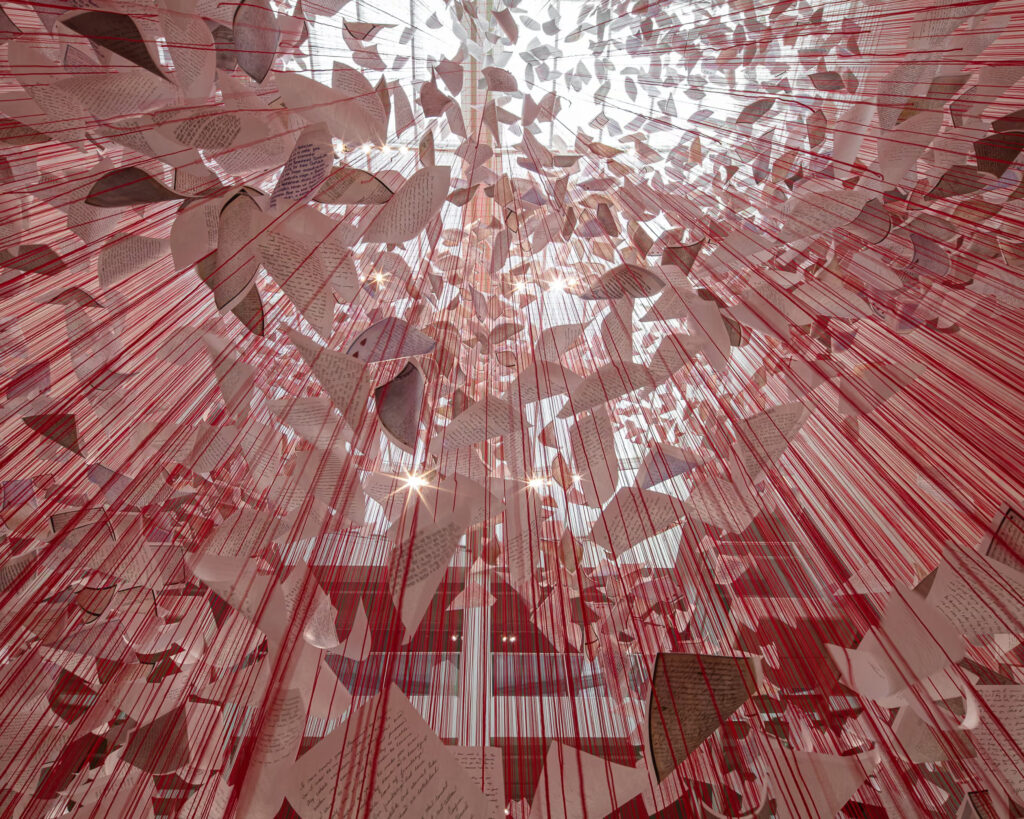
Sometimes the most interesting stories in art do not come from the centres everyone already knows, but from the edges—geographical, historical or generational. This week’s cultural landscape offers a striking reminder of how art constantly moves between rediscovery, endurance and transformation.
In Cornwall, the small town of Bodmin is preparing to launch a new festival designed to draw art lovers into a part of the region that is often overlooked. The initiative suggests a broader trend: cultural events are increasingly used to rebalance attention away from the most visited cities and toward places where the landscape, the history and the community can create a different kind of artistic encounter.
Rediscovery also plays a central role in the renewed attention around David Hockney. One of his early English landscapes is being shown publicly for the first time in three decades. The work offers a glimpse into a moment when Hockney was still shaping his relationship with the British landscape, long before the monumental digital drawings and iPad works of recent years. Seeing it again now allows viewers to trace the origins of an artist who has spent a lifetime reinventing how we look at the world.
Longevity, meanwhile, is embodied by Rose Wylie. At ninety-one she continues to paint with the same irreverent energy that made her famous: wild compositions, witty references and occasional nods to football culture. Her work remains proof that artistic language does not necessarily settle with age; sometimes it becomes freer, more playful and less constrained by expectations.
The idea of time also resonates in architecture. After 144 years of construction, Antoni Gaudí’s Sagrada Familia in Barcelona has finally been completed. The cathedral—one of the most extraordinary architectural projects of the modern era—stands as a testament to patience, continuity and the strange way in which a work conceived in the nineteenth century can still shape the imagination of the twenty-first.
Material culture appears in another form in two parallel exhibitions where artists transform secondhand clothing into monumental artworks. By assembling garments that once belonged to anonymous lives, they create sculptures that speak about memory, consumption and the hidden stories embedded in everyday objects.
Not all the news, however, points toward expansion. In the United Kingdom there are growing concerns that the long-standing policy of free entry to national museums and galleries might come to an end. If it were to change, it would mark a profound shift in the relationship between public institutions and the idea that culture should remain accessible to everyone.
Art history, meanwhile, continues to be rewritten. Artemisia Gentileschi’s interpretation of Mary Magdalene has drawn renewed attention for the intensity and psychological truth it brings to a figure often misrepresented in Western tradition. Through Gentileschi’s eyes, the saint appears not as a stereotype of repentance but as a complex and deeply human presence.
Finally, the power of images to confront reality emerges in the work of Ukrainian photographer Julia Kochetova. Her extraordinary photographs of war reflect not only what she has witnessed but what she has lived through. They remind us that art can still function as testimony—an attempt to capture experience at the very moment when history is being made.
Taken together, these stories reveal a cultural field that stretches across centuries and continents: from rediscovered paintings to unfinished cathedrals, from experimental sculpture to the raw documentation of war. What we learn from them is simple but essential—art remains one of the few languages capable of holding together memory, place and the urgency of the present.