Tre articoli sul Santa Maria della Scala: dalle parole ai fatti
21 Febbraio 2026
Tra festa, silenzio e profezia: quattro esercizi di cultura nel tempo della crisi
22 Febbraio 2026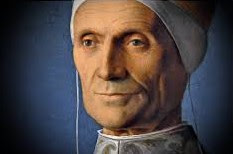
There is a painting in the National Gallery in London that deserves to stop you cold. Giovanni Bellini’s Doge Leonardo Loredan, completed around 1501–2, is one of those rare portraits in which a face becomes an entire civilization.
Painted a couple of years before Leonardo da Vinci began work on the Mona Lisa, it shares something of that picture’s uncanny stillness — the sense that the subject is not merely sitting for a portrait but inhabiting one, fully and permanently. Contemporaries understood this. Isabella d’Este, among the most discerning collectors of the early sixteenth century, once borrowed a Leonardo so she could hold it alongside a Bellini and compare. That tells you everything about the esteem in which Bellini was held.
But where the Mona Lisa is enigmatic and private, the Doge Loredan is public and political. This is not a man sharing a secret with the viewer. He is the embodiment of a state. Venice called itself the Serenissima — the most serene republic — and Loredan’s face delivers on that promise entirely. Calm without coldness. Authoritative without menace. His expression carries the long patience of an institution that has outlasted empires.
The painting works through accumulation of quiet detail. Golden light grazes his skin as if reflected off the surface of the Grand Canal. His ceremonial robe ripples with silks that speak of centuries of trade with the East — Constantinople, Alexandria, the spice routes of the Levant. The blue that fills the background is neither sky nor sea but somehow both, a painted atmosphere that suspends him between heaven and water, the two elements that made Venice possible.
What Bellini understood, and what makes this portrait endure, is that political power at its most persuasive does not shout. It rests. It waits. It looks at you with exactly this much benevolence and exactly this much distance, and asks nothing except that you recognize what you are standing before.
You are standing before Venice itself.