Dal riccio di castagno alla Posidonia: a Piancastagnaio la bioeconomia come strada per le aree interne
12 Novembre 2026
La scuola pubblica paga, le aziende dei dati incassano: il rischio nascosto dell’intelligenza artificiale in classe
13 Novembre 2026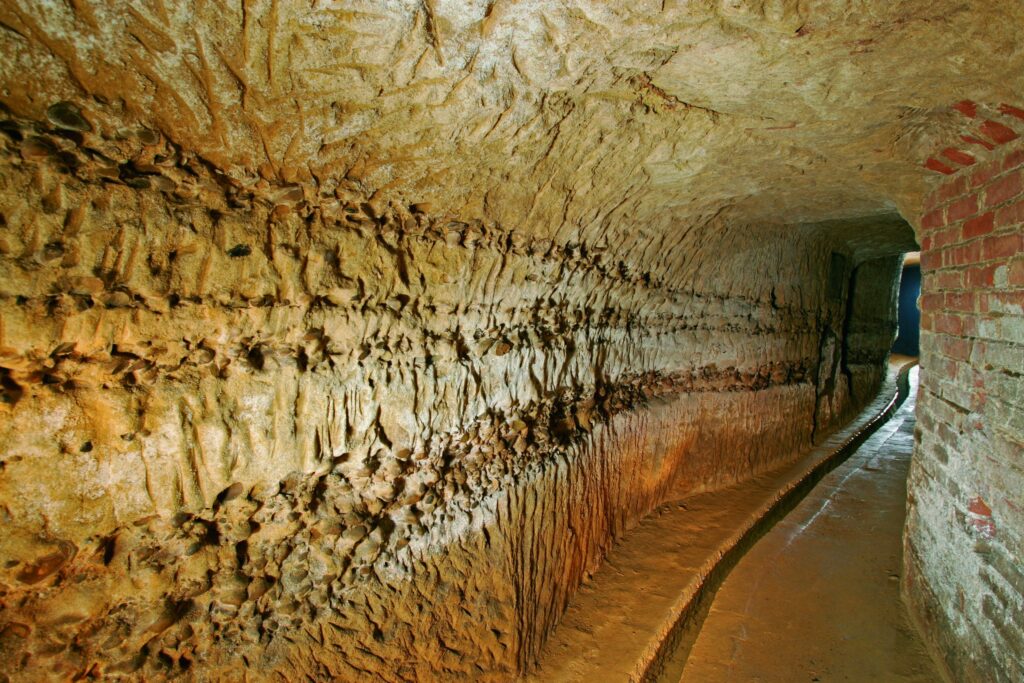
di Pierluigi Piccini
Siena è nata senza acqua. Nessun fiume, nessuna sorgente generosa, un crinale asciutto battuto dal vento. Davanti a questa mancanza la città ha avuto, fin dal Medioevo, due risposte possibili, e la sua storia si può leggere come l’oscillazione tra l’una e l’altra. La prima è il bottino. La seconda è la Diana.
Il bottino è l’acqua fatta. Venticinque chilometri di gallerie scavate a mano dal XII secolo in poi, che raccolgono goccia a goccia l’acqua filtrata dalle colline e la portano per pendenza alle fonti cittadine. Nessuna pompa, nessuna macchina, nulla di miracoloso: c’è il calcolo, la fatica, il tempo. E c’è la manutenzione, affidata ai bottinieri che entravano nel buio con la lucerna, pulivano, riparavano, perché un bottino abbandonato si intasa e smette di dare acqua. La sua ricchezza non esiste prima del lavoro e non sopravvive senza il lavoro.
La Diana è l’esatto rovescio. È il fiume sotterraneo che secondo la leggenda scorreva sotto la città, intero, abbondante, già lì. Non andava costruito: andava trovato. I senesi lo cercarono davvero, scavando pozzi, e uno nel convento del Carmine ne porta ancora il nome. Dante li derise per questo. Ma il punto non è che la Diana non esistesse. Il punto è che cosa significa cercarla.
Chi cerca la Diana pensa che la ricchezza preceda il lavoro, che sia nascosta da qualche parte e basti un colpo di fortuna per liberarla. Pensa che una volta trovata scorrerà da sola, senza bisogno di cura. Pensa che sia una e risolutiva, mentre i bottini sono tanti rami piccoli che insieme fanno un sistema. E pensa che non tocchi a lui produrla, al massimo scoprirla. Il cercatore della Diana somiglia al cercatore di tesori, non al costruttore: anche quando scava, scava per trovare, non per fare. È un’idea della vita collettiva fondata sulla rendita invece che sull’opera, sull’attesa invece che sulla cura.
Siena è stata grande quando ha scelto il bottino. La stagione dei bottini è quella del Campo dichiarato spazio pubblico, del Palazzo e della Torre del Mangia, del Buon Governo, di una rete mercantile e bancaria costruita con il lavoro e il rischio. Un’unica attitudine attraversa tutto: la convinzione che la condizione della propria vita non si riceve, si costruisce. Quando nel 1343 l’acqua arrivò in piazza, la città fece festa, e da quella gioia viene il nome di Fonte Gaia: si festeggiava un compimento, non una grazia.
Poi la Diana è tornata. Per decenni ha avuto il volto del Monte dei Paschi trasformato da opera in rendita, un fiume di risorse che scorreva sotto la città senza che nessuno dovesse più chiedersi come alimentarlo. Erogazioni, posti, contributi: acqua che arrivava da sola. Quando quel fiume si è prosciugato, la città non è tornata a scavare. Ha cercato un’altra Diana: il turismo che arriva per inerzia, il nome di Siena che si vende da sé, il grande finanziamento esterno, l’occasione salvifica sempre annunciata e sempre rinviata.
Il faber resiste soprattutto nel Palio, inteso non come i novanta secondi della corsa ma come tutto ciò che lo rende possibile: Contrade che si autogovernano, volontari che costruiscono, cucinano, restaurano, custodiscono archivi e memorie, insegnano ai bambini a girare la bandiera, mentre i vecchi spiegano i confini. È un lavoro gratuito, collettivo, quotidiano, invisibile per gran parte dell’anno: il lavoro dei bottinieri. Qualcosa sopravvive nel volontariato e in qualche bottega che trasmette ancora un mestiere, ma sono isole nate dalla stessa matrice comunitaria. Fuori da quei recinti, nella vita economica e civile, prevale l’attesa.
Siena non ha perso la capacità di fare: l’ha rinchiusa nel rito. Dentro le Contrade scava ancora; nella città, aspetta la Diana. Il futuro dipende dalla possibilità che quell’energia esca dal recinto e torni a reggere la vita comune. Non serve un miracolo, e nessun fiume sotterraneo verrà a salvarla. L’acqua della Fonte Gaia non è mai arrivata per fortuna: qualcuno è sceso sotto terra a scavare.
SIENA WAITS FOR A RIVER THAT DOES NOT EXIST
by Pierluigi Piccini
Siena was born without water. No river, no abundant spring, just a dry, windswept ridge. Faced with this absence, the city has had two possible responses ever since the Middle Ages, and its history can be read as a movement back and forth between them. The first is the bottino. The second is the Diana.
The bottino is water made possible by human effort. Twenty-five kilometres of tunnels dug by hand from the twelfth century onwards, collecting, drop by drop, the water that filters through the hills and carrying it by gravity to the city’s fountains. No pumps, no machinery, nothing miraculous: just calculation, toil and time. And there is maintenance, entrusted to the bottinieri, who would enter the darkness with an oil lamp to clean and repair the tunnels, because an abandoned bottino clogs up and stops supplying water. The wealth it yields does not exist before the work and cannot survive without it.
The Diana is the exact opposite. It is the underground river that, according to legend, flowed beneath the city: fully formed, abundant, already there. It did not need to be built: it needed to be found. The people of Siena really did search for it, digging wells, and one at the Carmine convent still bears its name. Dante mocked them for it. But the point is not that the Diana did not exist. The point is what it means to search for it.
Those who search for the Diana believe that wealth comes before work, that it is hidden somewhere and that a stroke of luck is all it takes to release it. They believe that, once found, it will flow of its own accord, with no need for care. They believe it is a single solution to everything, whereas the bottini are many small branches that together form a system. And they believe it is not their job to produce it, only, at most, to discover it. The seeker of the Diana resembles a treasure hunter, not a builder: even when they dig, they dig to find, not to make. It is a vision of collective life built on living off wealth rather than creating it, on waiting rather than care.
Siena was great when it chose the bottino. The age of the bottini was the age when the Campo was declared a public space, the age of the Palazzo Pubblico and the Torre del Mangia, of Good Government, of a trading and banking network built through work and risk. A single outlook runs through it all: the belief that the conditions of our lives are not handed to us; we build them. When water reached the square in 1343, the city celebrated, and that joy gave Fonte Gaia its name: they were celebrating an achievement, not a blessing.
Then the Diana returned. For decades, it took the form of Monte dei Paschi, transformed from something built through work into a source of effortless income, a river of resources flowing beneath the city without anyone having to ask any longer how to sustain its flow. Grants, jobs, subsidies: water that arrived of its own accord. When that river dried up, the city did not go back to digging. It went looking for another Diana: tourism that keeps coming through sheer inertia, the name of Siena selling itself, the great injection of outside funding, the chance of salvation forever announced and forever postponed.
The spirit of the maker survives above all in the Palio, understood not as the ninety seconds of the race but as everything that makes it possible: Contrade that govern themselves, volunteers who build, cook, restore, preserve archives and memories, teach children to twirl their flags while the elders explain where the boundaries lie. It is unpaid, collective, daily work, invisible for much of the year: the work of the bottinieri. Something of it lives on in voluntary work and in a few workshops where a craft is still handed down, but these are islands born of the same communal spirit. Beyond those confines, in economic and civic life, waiting prevails.
Siena has not lost its ability to build: it has confined it to ritual. Within the Contrade, it still digs; in the city at large, it waits for the Diana. Its future depends on whether that energy can escape those confines and once again sustain the life of the whole city. No miracle is needed, and no underground river will come to save it. The water never reached Fonte Gaia by luck: someone went underground to dig.