Rivoluzione teleriscaldamento. Primi allacci a Piancastagnaio
21 Marzo 2026
Buon ascolto e buone letture!
22 Marzo 2026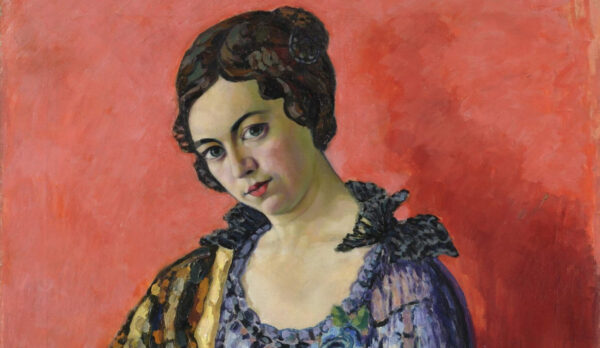
Konrad Mägi at Dulwich Picture Gallery, London
There is something quietly provocative in the label “Estonia’s greatest modernist painter” — not because it overstates, but because it forces the question back on us: why don’t we know this name? Konrad Mägi arrives at Dulwich Picture Gallery from 24 March to 12 July carrying the full weight of a tradition that Western art history has consistently filed under elsewhere — the Baltic fringe, the forgotten periphery, the room at the end of the corridor. This exhibition may be the moment that corridor finally opens onto something wider.
Mägi worked in the early twentieth century with a chromatic intensity that places him in genuine dialogue with Fauvism and Expressionism, yet his landscapes carry a specific northern light — Baltic, austere, almost devotional — that no French or German contemporary could have produced. The question his work poses is not merely aesthetic but geopolitical: what does the canon lose when it draws its maps too narrowly?
Also showing this week
Fiona Banner aka The Vanity Press is at The Common Guild in Glasgow from 21 March to 25 April, bringing her singular brand of conceptual art to bear on language itself — word-pictures of remarkable density, where text becomes image and meaning becomes texture.
In London, Hurvin Anderson opens at Tate Britain from 26 March to 23 August. Shortlisted for the 2017 Turner Prize, Anderson is among the most thoughtful figurative painters working today: his canvases are lyrical without sentimentality, nuanced in their handling of identity, memory and the surfaces — literal and social — that divide us.
At the Freud Museum, also in London, Leonora Carrington’s surrealist work finds perhaps its most charged setting. The last home of Sigmund Freud — whose theorisation of the unconscious gave Surrealism much of its intellectual scaffolding — hosts Carrington from 25 March to 28 June. The conversation between house and work is one of those rare instances where venue becomes argument.
Finally, Rehana Zaman’s two films are at Site Gallery in Sheffield until 17 May. Tracing the lives of seasonal migrant workers through landscapes of poverty and precarious survival, Zaman’s practice asks what it means to move through a world that extracts labour while refusing belonging.